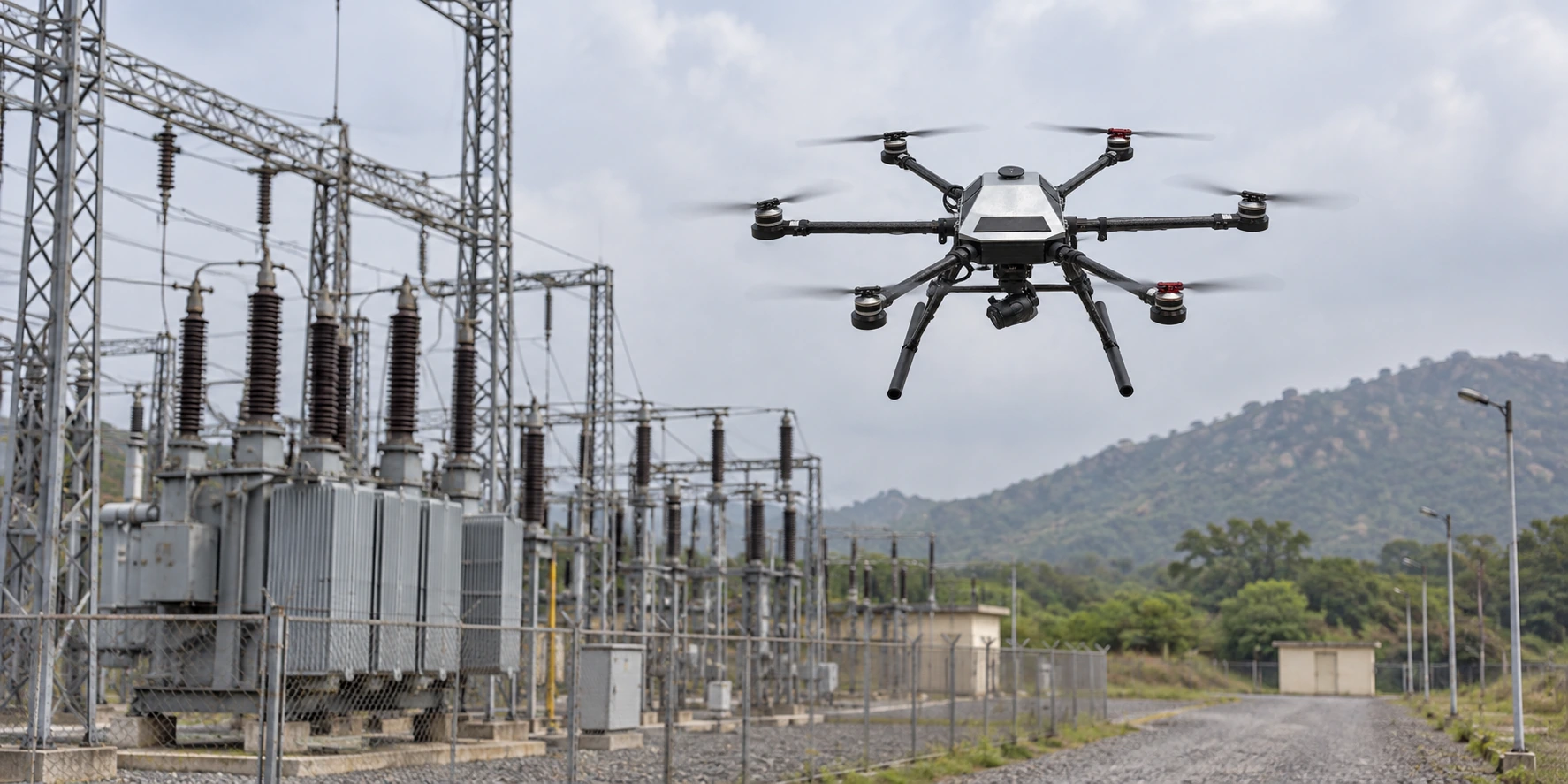
Ground power station
Generator or mains input is converted and monitored by the ground system before power enters the tether.

KAPYAH / TETHERED SYSTEMS
A tethered aircraft is one part of a complete system. Ground power, cable management, data, control and onboard reserve power work together to hold a useful vantage point.
PERSISTENT AERIAL PRESENCE
One physical connection. Continuous ground power. A persistent vantage point when a mission needs more time in the air.
SYSTEM ARCHITECTURE
Company technical material describes a hybrid architecture in which mains or generator power is managed by a ground station, passed through a tether and received by the aircraft power module. The onboard battery remains available as a reserve.
Generator or mains input is converted and monitored by the ground system before power enters the tether.
A motorised spool and winch manage cable deployment. Surveillance configurations carry power and data; the lighting configuration uses a power-only tether.
The airborne module receives tether power and distributes it to the propulsion, control and mission systems.
The onboard battery charges while flying and provides a backup power path when the ground supply is interrupted.
CURRENT TETHERED LINEUP
The current catalogue ranges from the compact Hexa-T60 to the higher-vantage Hexa-T150, with payload and rotor configurations selected around the mission.
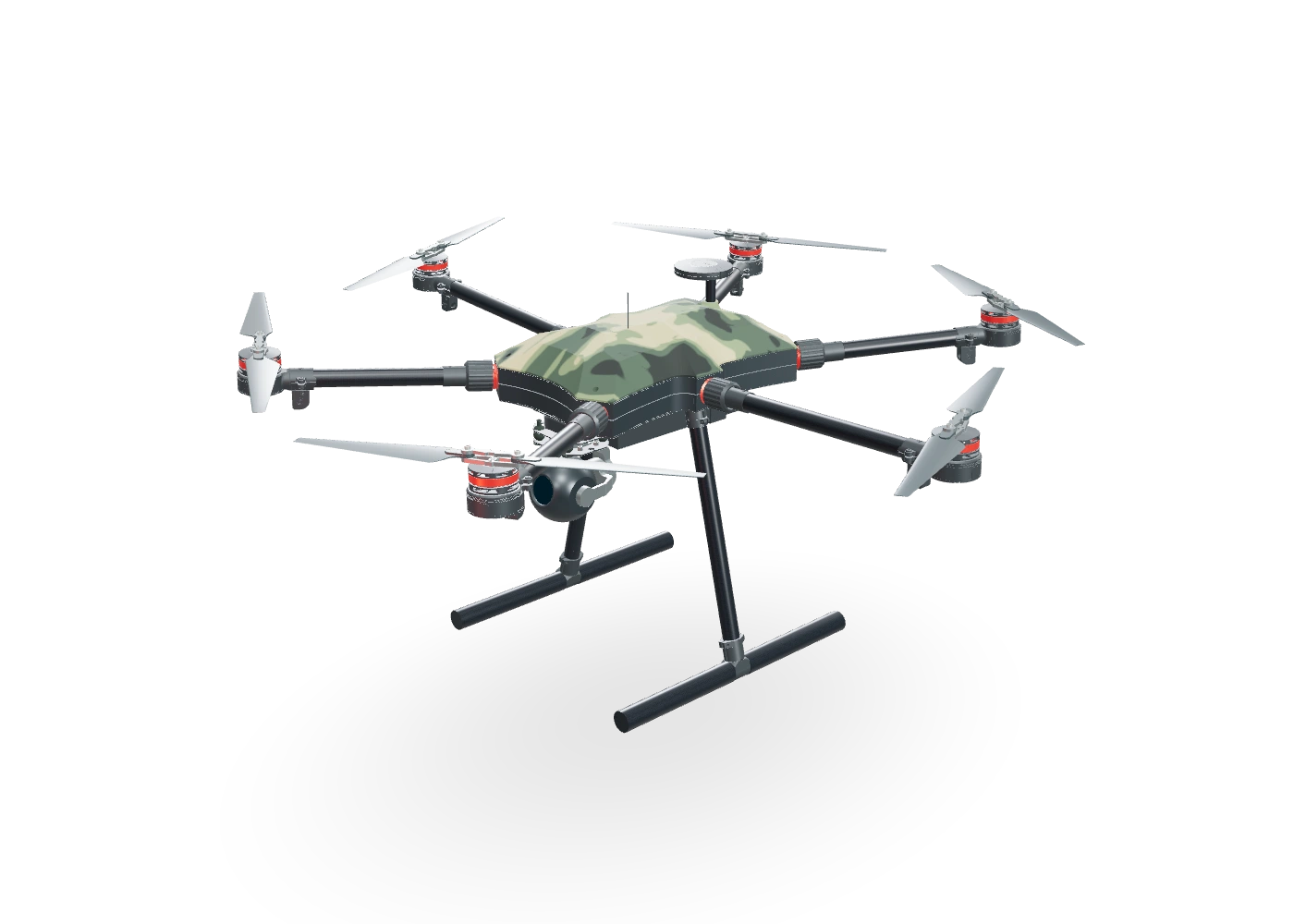
Tethered systems
A compact tethered vantage point. Ground power and a data connection keep the aircraft connected to the team below.
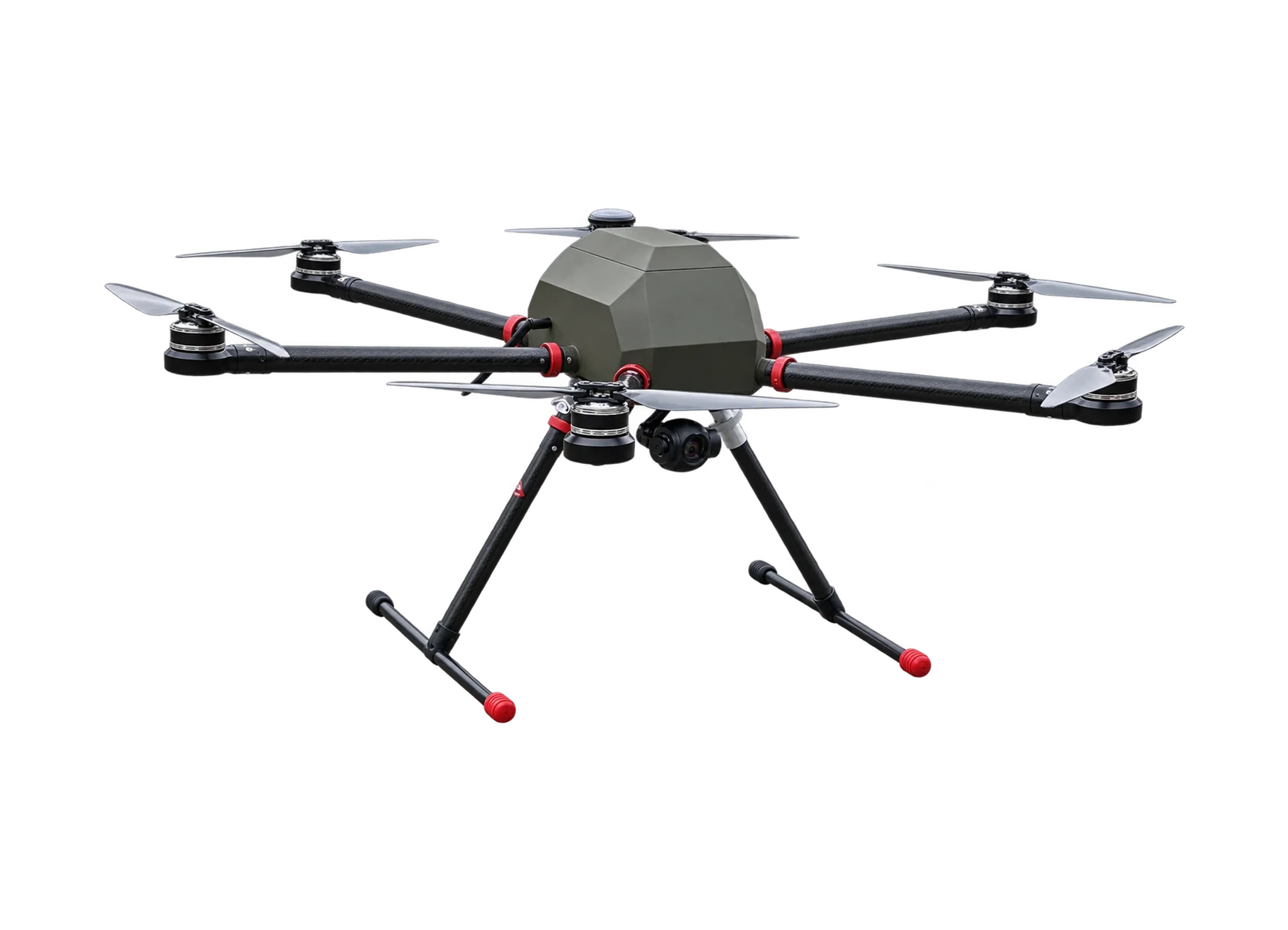
Tethered systems
A six-rotor platform for a wider vantage point, with configurable day, night and thermal observation payloads.
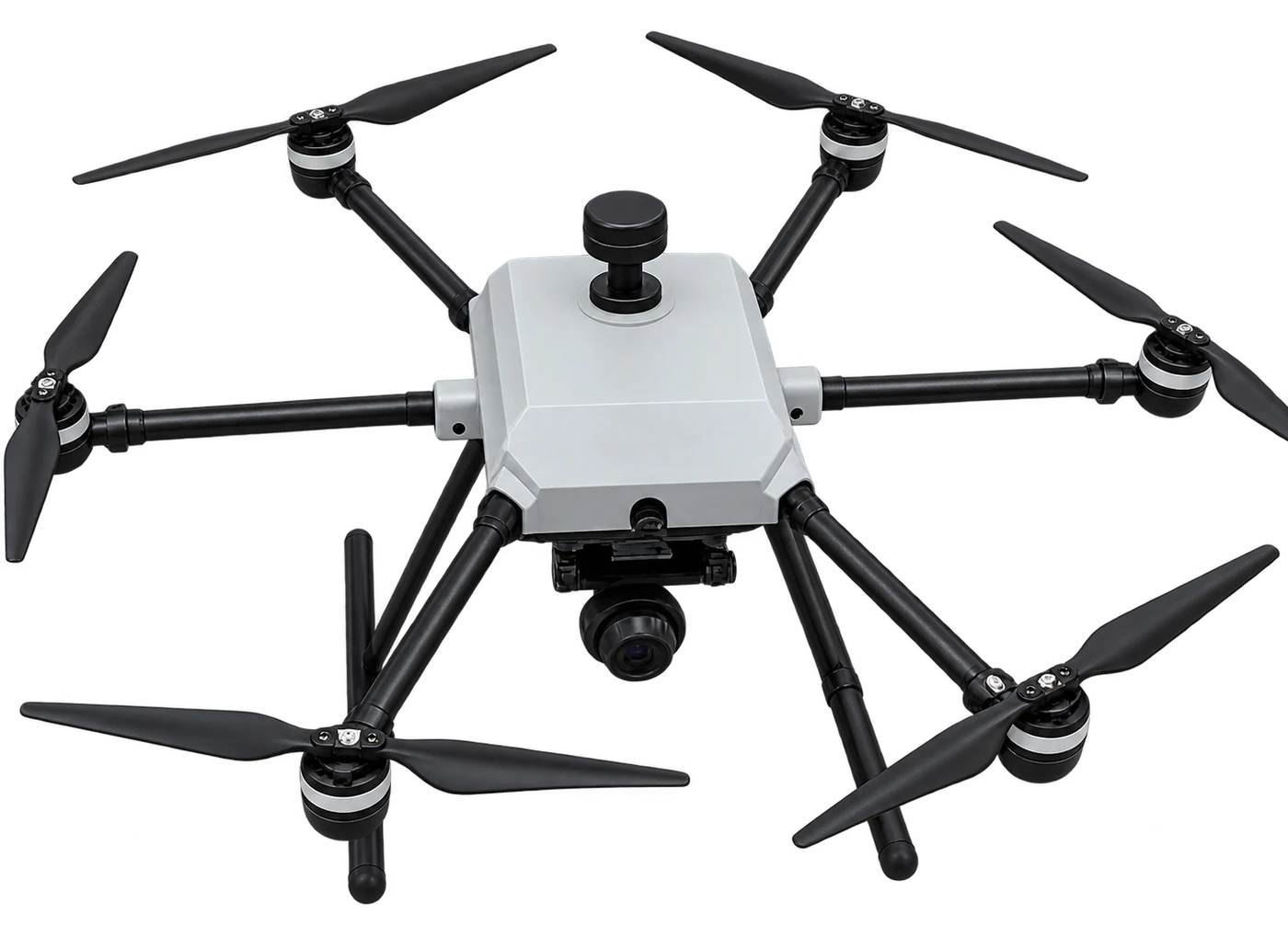
Tethered systems
The highest operating vantage point in the published tethered lineup, with a larger mission payload allowance.
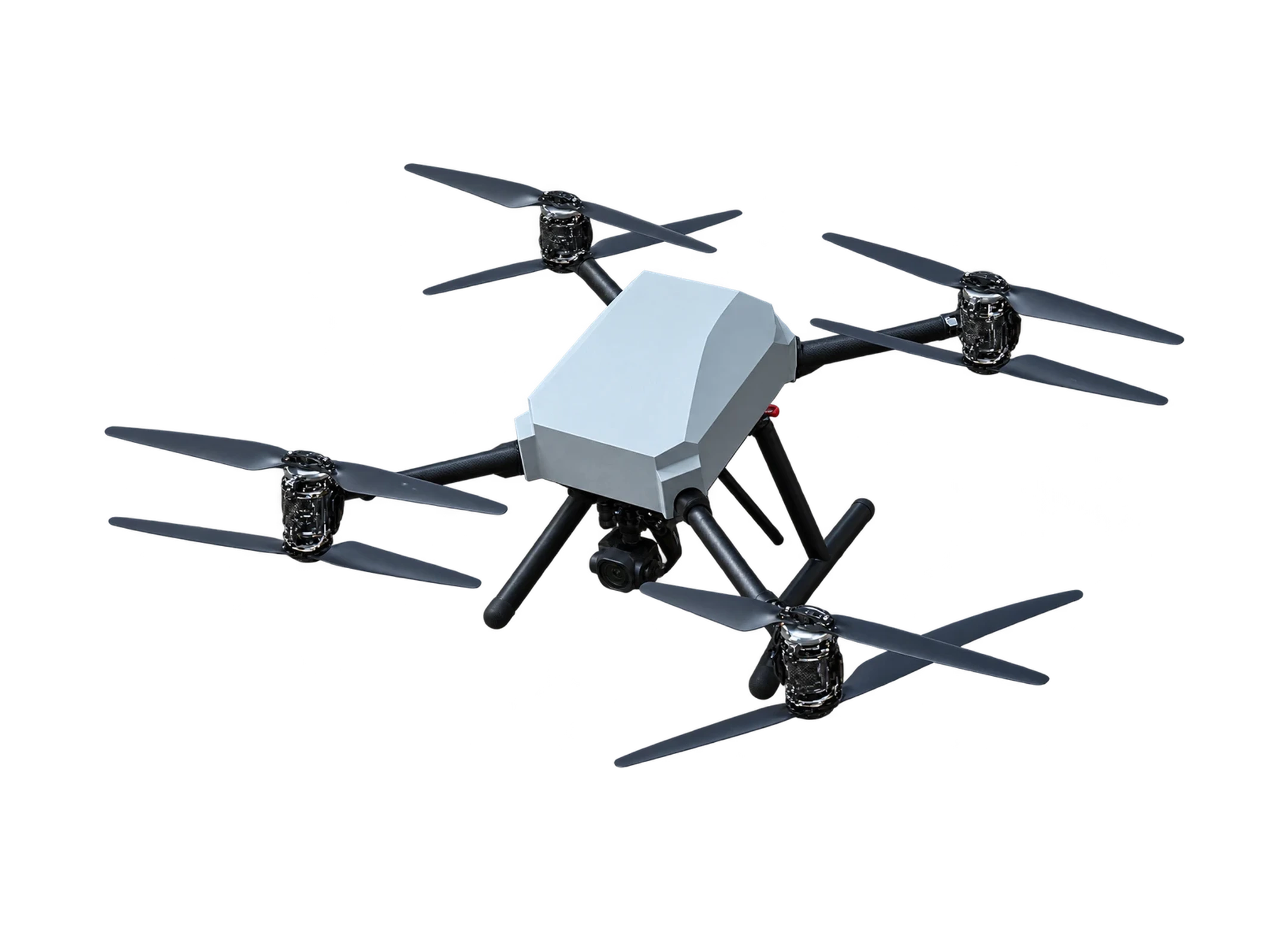
Tethered systems
Eight rotors in a compact coaxial arrangement. A tethered architecture with capacity for more demanding observation payloads.
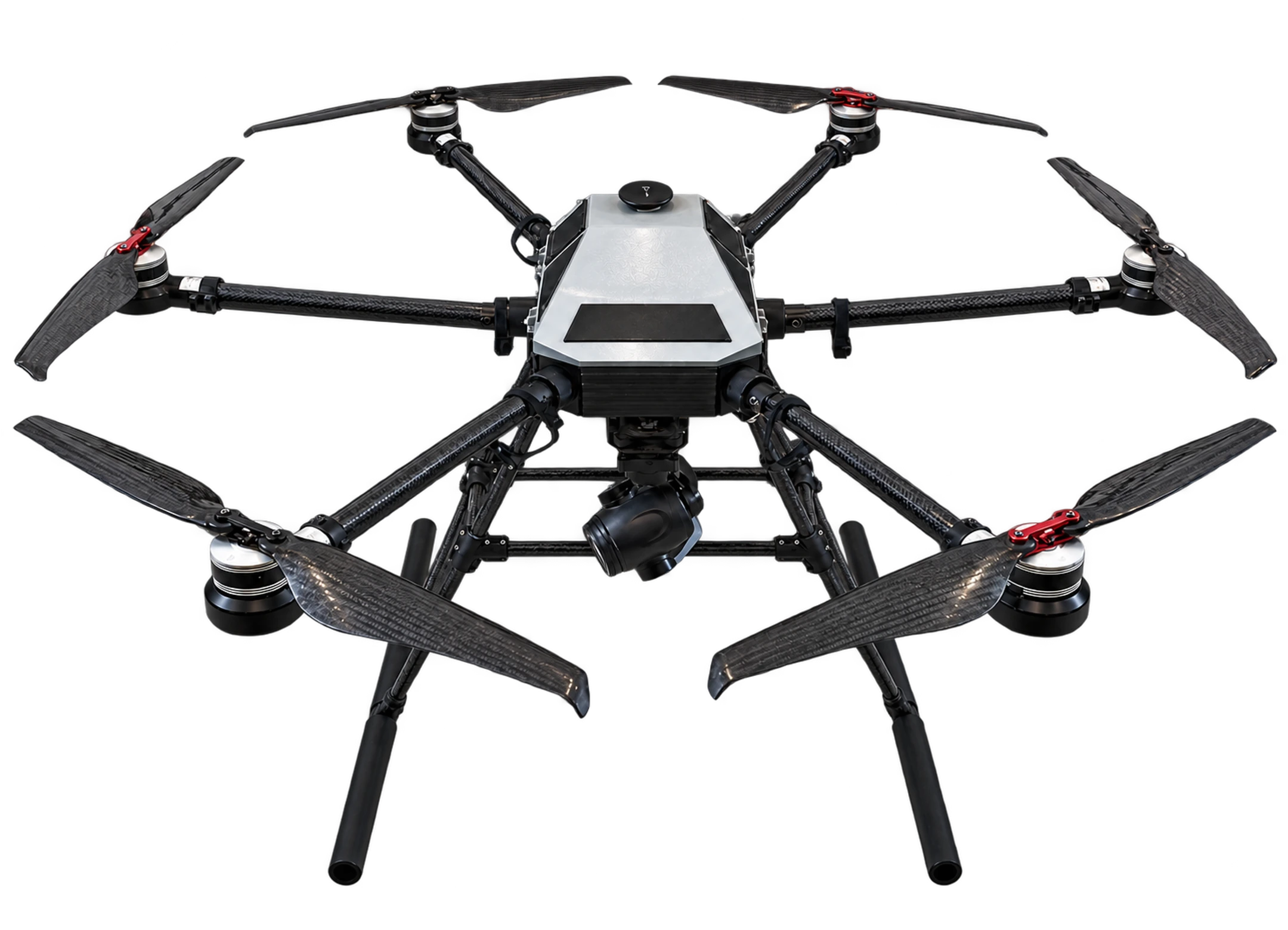
Tethered systems
A rugged, stable tethered aircraft built for reliable flight in extreme conditions.