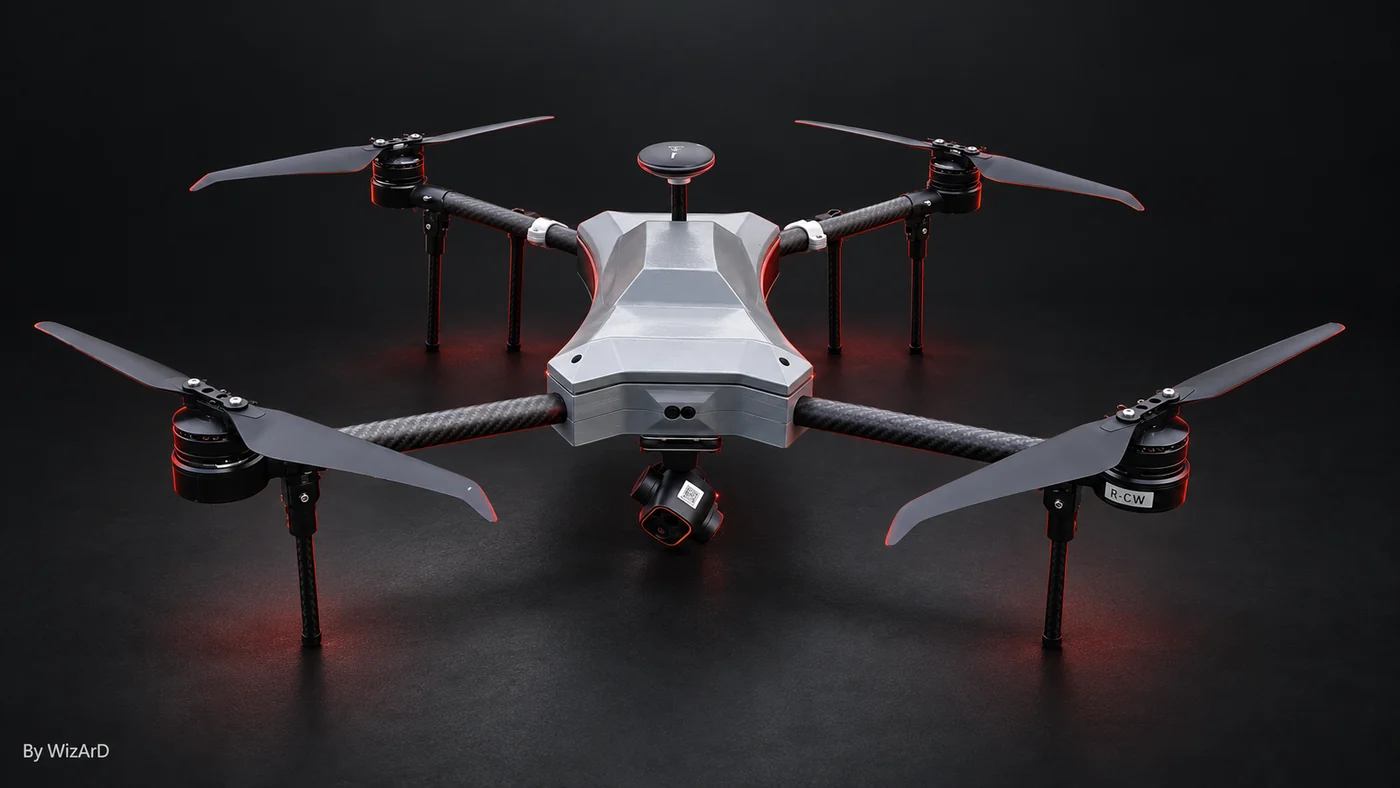
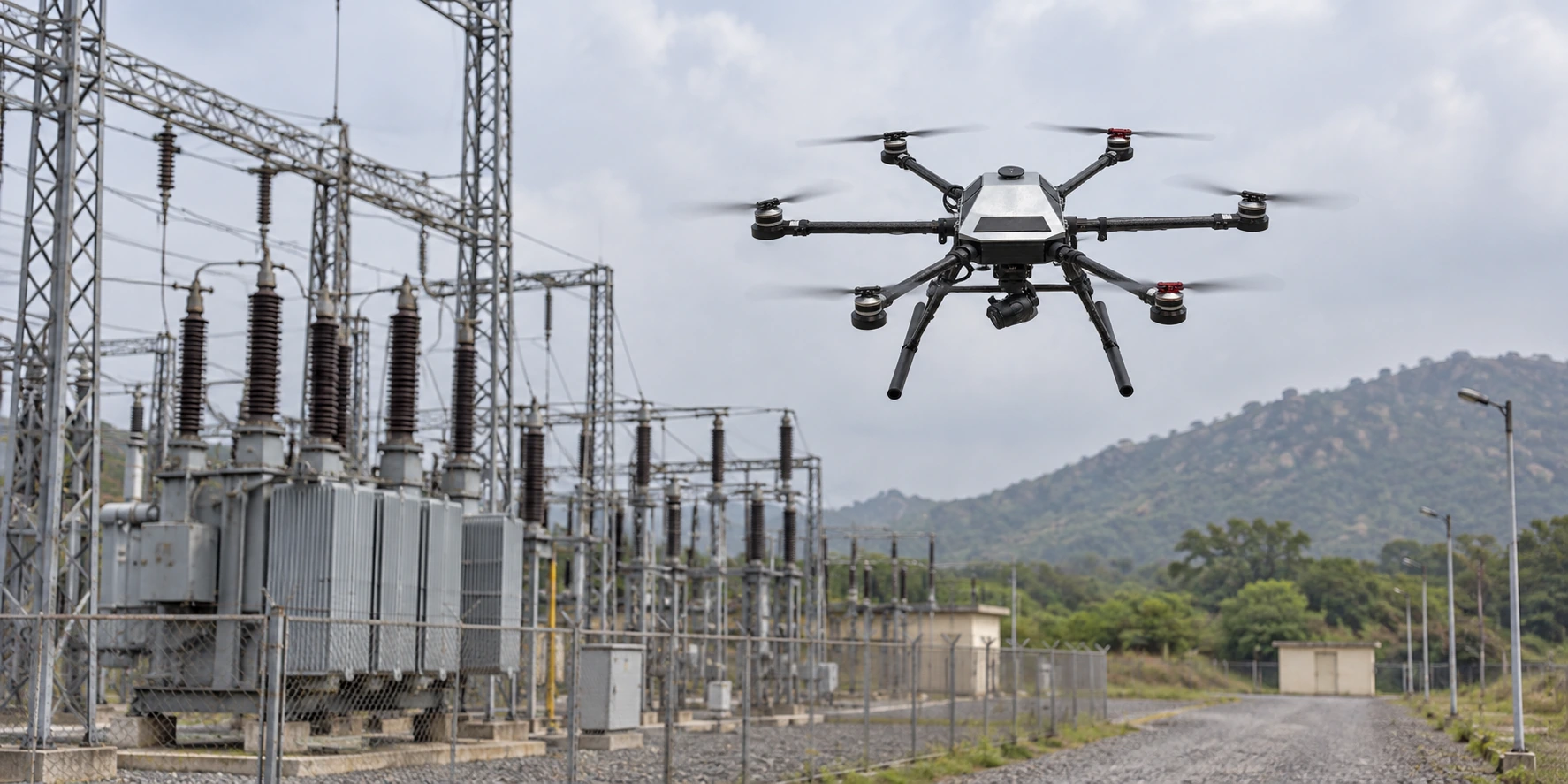
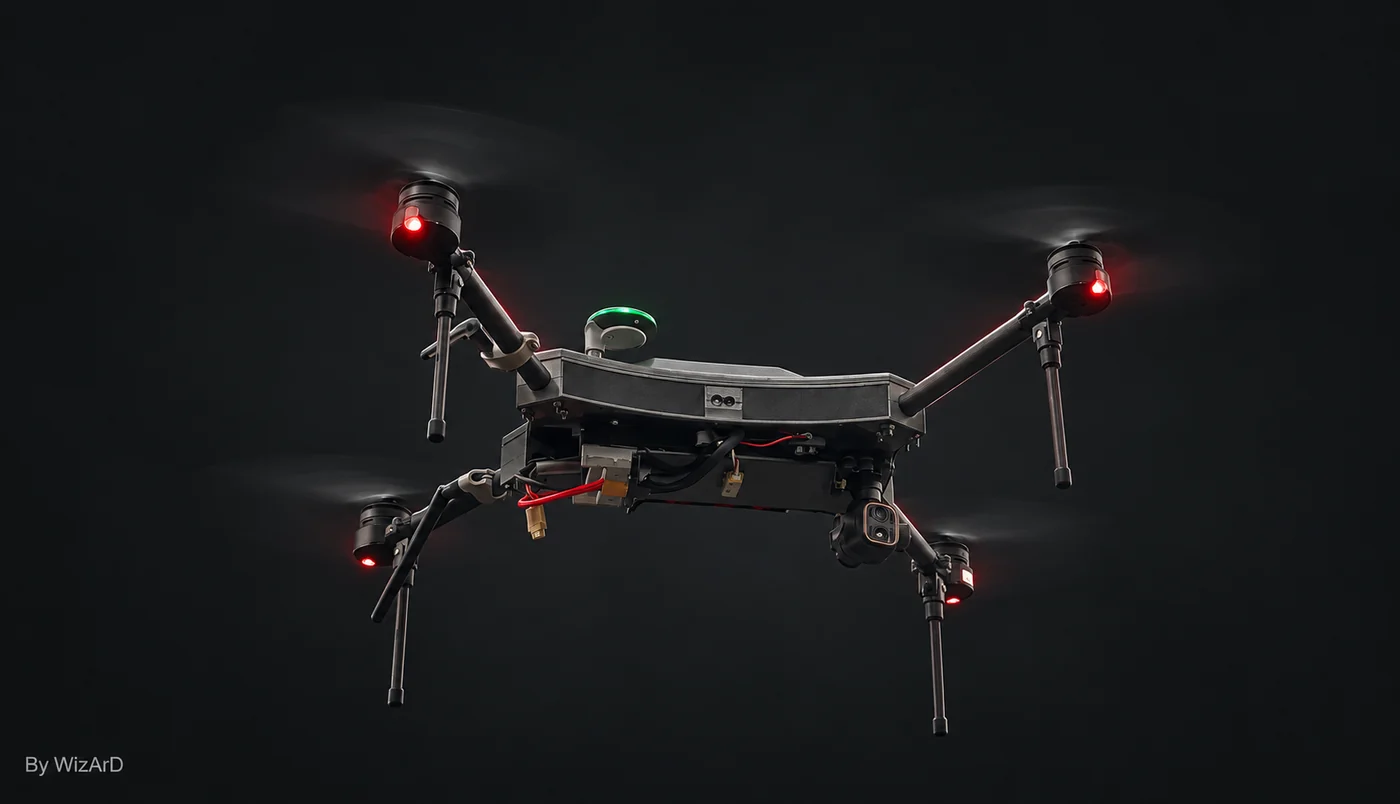
The four-rotor configuration
A quadcopter uses four rotors in an X or square arrangement. Opposing rotation balances torque, while changes in rotor thrust control the aircraft. This layout provides a relatively straightforward mechanical platform for many aerial tasks.
A practical set of trade-offs
Four-rotor systems can offer a compact footprint, accessible maintenance, and a broad ecosystem of flight-control and imaging equipment. The architecture serves inspection, site monitoring, aerial media, education, and prototyping. Performance still depends on the complete aircraft configuration.
Start with the operating requirement
Assess the whole platform, rather than selecting from a single headline specification.
- Payload and takeoff weight
- Battery configuration and practical endurance
- Motor and propeller selection
- Navigation and return-to-home behaviour
- Imaging and gimbal requirements
- Command and video-link requirements
Understand the limits
Compared with larger multirotors, quadcopters generally have less payload headroom and reduced motor-out redundancy. A motor failure can make controlled recovery difficult. Wind conditions and the size of the aircraft also influence a sensible operating envelope.
Match the airframe to the work
The original article discusses quadcopters for operators, media teams, educational organisations, and inspection users with moderate payload requirements. The right selection balances portability, lift, observation equipment, and the intended mission.